Requirements
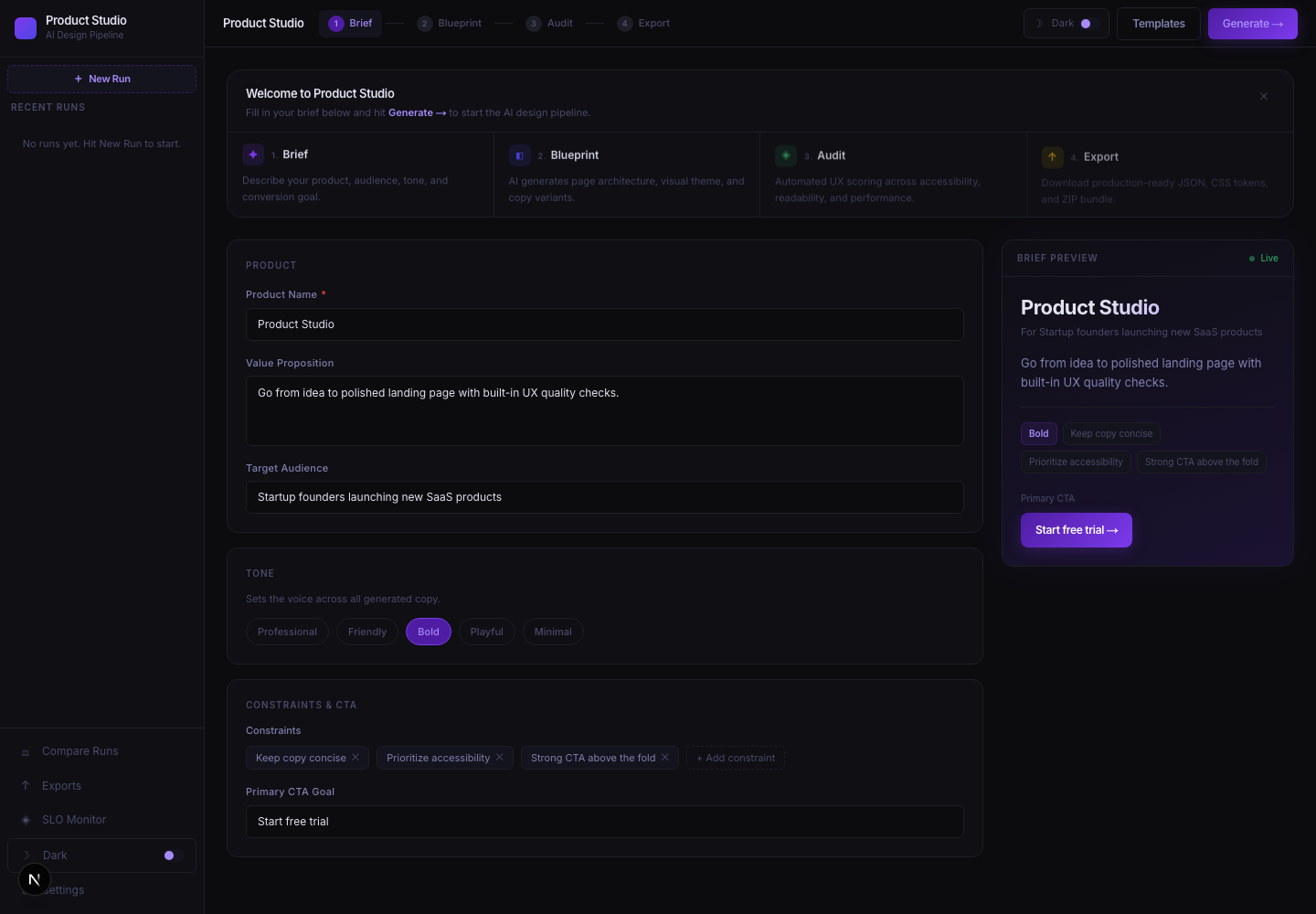
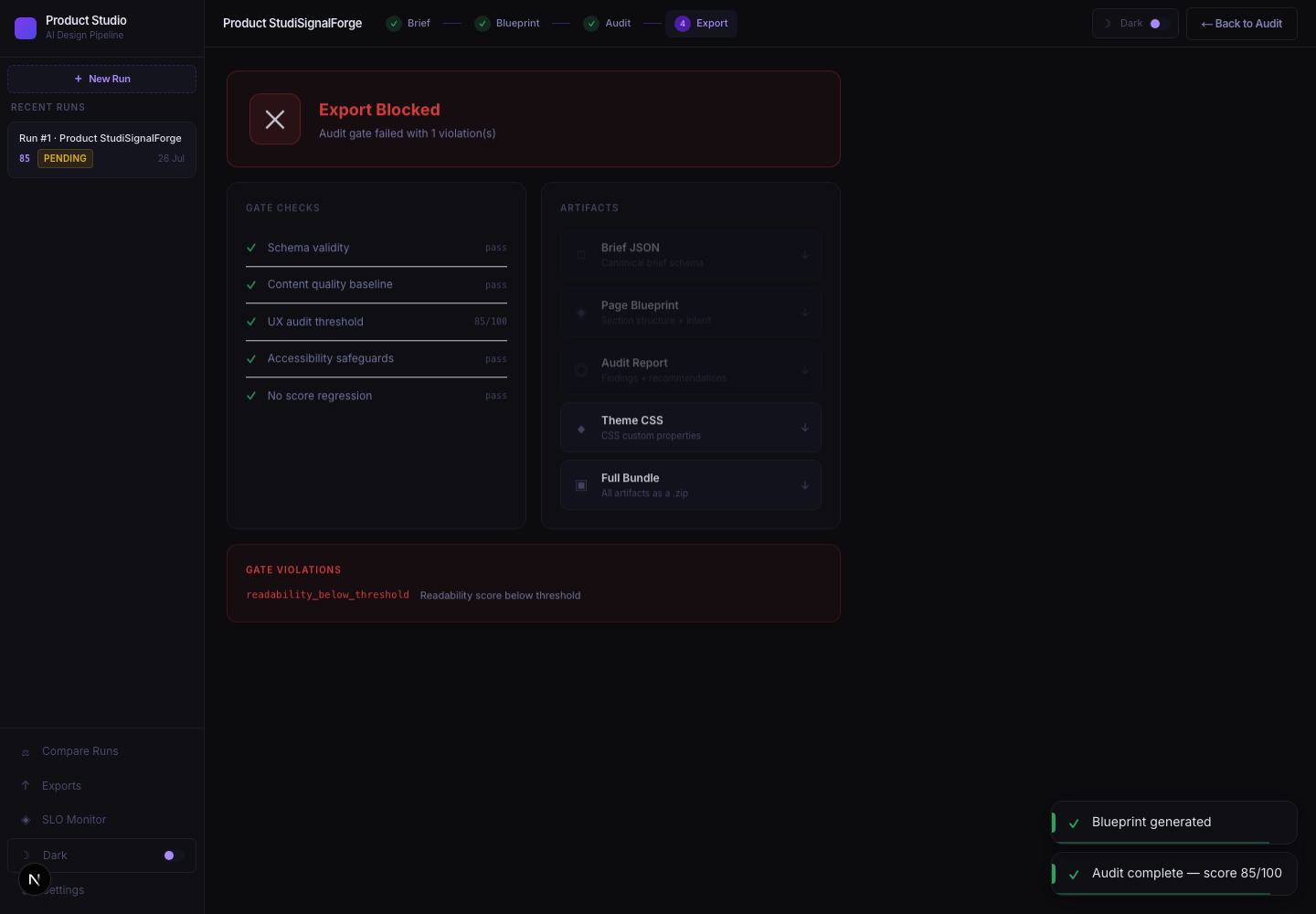
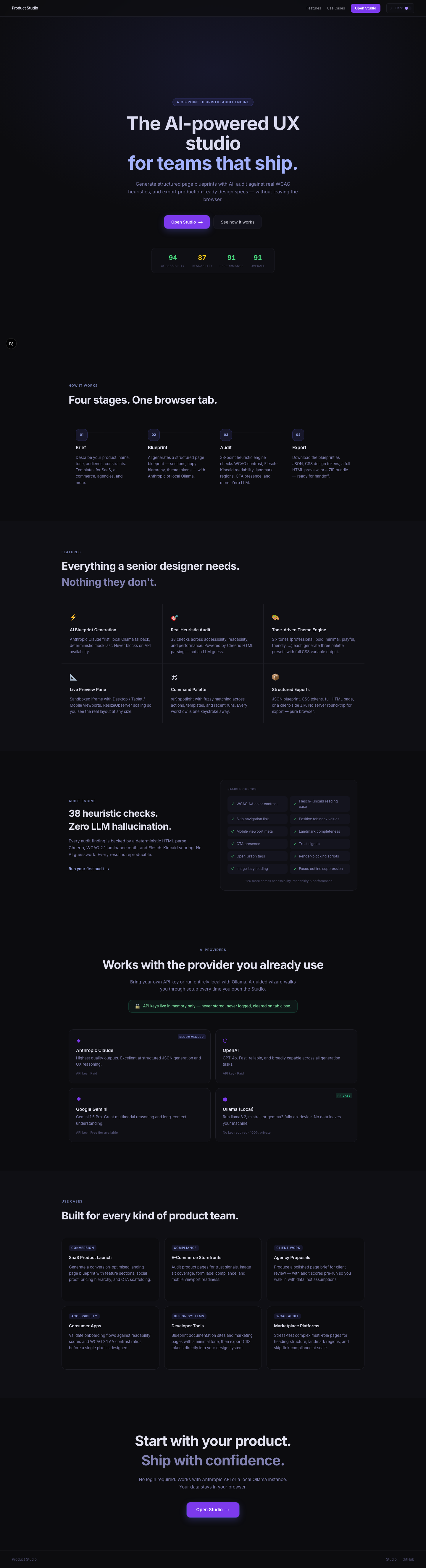
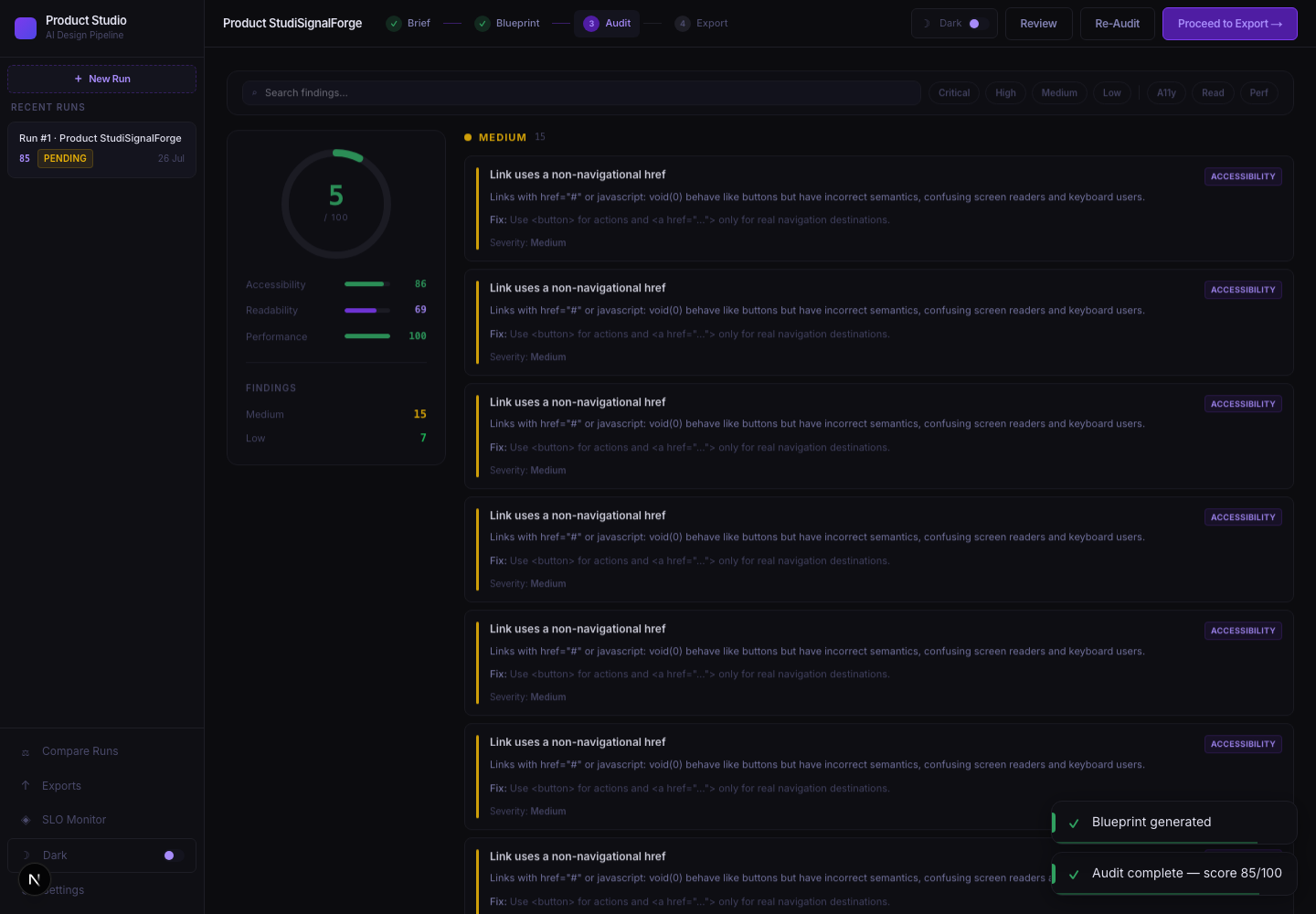
The requirement was to reduce idea-to-page time without accepting the usual weakness of AI page generators: plausible output with no proof of quality. The workflow therefore had to capture a brief, produce a structured blueprint, generate theme tokens, audit the result deterministically, and export usable artifacts.
Stack choices
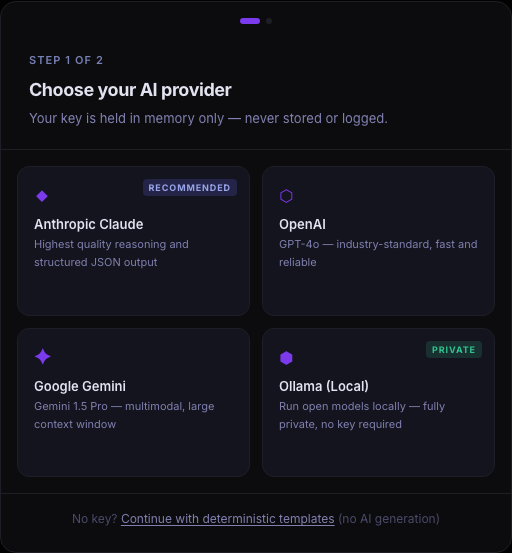
The app became a Next.js monorepo so the studio UI, agent runtime, theme engine, UX audit package, and shared schemas could evolve independently. Provider calls were abstracted behind Anthropic, OpenAI/Gemini, and Ollama fallbacks, while Cheerio and the audit package handled HTML inspection without relying on model judgment.
Design system
The UI follows Brad Frost's atomic design: atoms, molecules, organisms, and templates with imports flowing downward. The visual system uses Product Studio tokens such as ps-canvas, ps-surface, ps-raised, ps-border, ps-accent, ps-ink, and severity colors, which made the studio feel like a coherent workbench rather than a collection of generated panels.
MVP definition
The MVP was the four-stage path from brief to blueprint, audit, and export. Multi-page generation, CMS integration, collaboration, and analytics were explicitly kept out so the first version could prove the core promise: generated page structure plus measurable UX quality.
Progression
Development started with canonical schemas for Brief, PageBlueprint, ThemeTokens, AuditReport, and FixPlan. The UI then layered in review checkpoints, run history, command palette actions, preview viewports, and export formats once those contracts were stable enough to keep the generated artifacts predictable.